
Cynthia Freeman
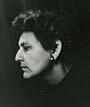
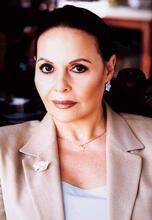
Cynthia Freeman was a successful novelist who incorporated themes of Jewish American life into her romances and adventures. Freeman married at eighteen, raised two children, and worked as an interior decorator before she developed a debilitating illness at age 50. She then turned to writing and published her first book, A World Full of Strangers, in 1975. The book, a multigenerational tale of a self-hating Jew who hides his origins from his son, was an instant bestseller. While critics panned her novels, readers loved her stories of Jews torn between assimilation and tradition. Freeman’s personal life was fraught with tragedy, but she continued to write, publishing her final novel, The Last Princess, a year before her death.
Cynthia Freeman (Beatrice Cynthia Freeman Feinberg) began her writing career at age fifty-five, publishing her first book, A World Full of Strangers, in 1975. The book became an instant best-seller and sold over one million copies. Quite an accomplishment for a woman who quit school in the sixth grade, married at age eighteen, had two children, and worked as an interior decorator for twenty-five years.
Early Career
She was born around 1915 in New York City to Albert C. and Sylvia Jeannette (Hack) Freeman. The family moved to San Francisco when she was six months old. After Freeman dropped out of school, her well-educated English mother became her tutor. At age fifteen, Freeman attended the University of California at Berkeley, auditing the courses that interested her. Three years later, she married Herman Feinberg, her grandmother’s doctor, who was fifteen years her senior. The couple had two children, Sheldon and Arlene.
Although Freeman always had a love of writing, she never seriously considered it as a career until she suffered a debilitating five-year illness beginning when she was fifty years old. To keep herself occupied, she wrote A World Full of Strangers, a multigenerational saga centered around a Jew from New York’s Lower East Side who not only concealed his ethnic identity from his son, but also engaged in acts of antisemitism. Despite negative reviews, the reading public responded enthusiastically to the novel.
Freeman’s subsequent novels were equally successful. By 1980, she had completed Fairytales (1977), The Days of Winter (1978), Portraits (1979), and Come Pour the Wine (1980). These novels were also criticized as being simpleminded romances with one-dimensional characters and overly dramatic and unbelievable plots. Still, one critic gave Freeman credit for her compulsively readable writing style and for creating characters that her readers really cared about.
Jewish Themes
A central theme running through most of Freeman’s novels is the struggle of Jewish immigrants to assimilate to American life while at the same time maintaining Jewish traditions. Freeman’s work was influenced by her family’s closeness and by her concern for the continuation of Jewish life and culture.
Her life was not all fame and good fortune; she also experienced personal tragedies. Her husband developed Alzheimer’s disease. In 1985, her daughter died in an automobile accident, followed by her mother’s death a few months later. The following year, her husband died. For Freeman, writing became a way to escape the pain.
Her novel No Time for Tears (1981) is considered her most ambitious work. Critics agreed that the book was not only a generational saga, but also a portrayal of the quest for a Jewish state in Palestine through the lives of the characters.
In the 1980s, Freeman also wrote Catch the Gentle Dawn (1983), Illusions of Love (1984), Seasons of the Heart (1986), and The Last Princess (1987).
Death & Legacy
On October 22, 1988, she died of cancer. She is remembered as a best-selling author of popular romances during the 1970s and 1980s. Assertive, upbeat, intelligent, and ambitious, Freeman had these inspiring words to say in an interview with Parade magazine in 1985: “All of us are gifted in some unique way. … Imagination is forever young, dreams don’t turn gray. And remember, a royalty check never hurt either.”
Selected Works
Catch the Gentle Dawn (1983)
Come Pour the Wine (1980)
The Days of Winter (1978)
Fairytales (1977)
Illusions of Love (1984)
The Last Princess (1987)
No Time for Tears (1981)
Portraits (1979)
Seasons of the Heart (1986)
A World Full of Strangers (1975).
Collins, Glenn. “Cynthia Freeman Is Dead at 73: Writer of Best-Selling Romances.” NYTimes, October 26, 1988, B12.
Contemporary Authors. Vols. 81–84 (1962–): 165.
Contemporary Authors, New Revision Series. Vol. 29 (1981–): 137–138.
Lawson, Carol. “Behind the Bestsellers: Cynthia Freeman.” Washington Post, April 3, 1980.
Los Angeles Times Book Review, December 20, 1981, and February 21, 1988.
NYTimes Book Review, November 22, 1981.
Obituaries. Chicago Tribune, October 27, 1988, and Los Angeles Times, October 27, 1988; Publishers Weekly, May 30, 1977.
Ramsdell, Kristin. Happily Ever After: A Guide to Reading Interests in Romance Fiction (1987).
Stix, Harriet. “Novelist Cynthia Freeman: It’s Never Too Late.” Los Angeles Times, June 12, 1986, sec. 5, pp. 6–7.
Washington Post Book World, November 28, 1980.